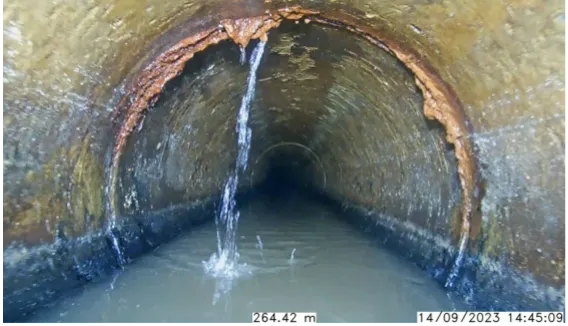
Benefits and Case Study of Integrated Sensor Surveys in Wastewater Collection Systems
Executive Summary
This publication examines the benefits of integrated sensor surveys for wastewater collection systems and highlights how combining sonar, laser, CCTV, GPS, and additional sensing technologies can improve infrastructure condition assessments and maintenance planning.
Using a municipal trunk sewer case study, the paper demonstrates how detailed survey data supported more accurate cleaning scopes, improved contractor confidence, and reduced uncertainty associated with sewer rehabilitation and maintenance activities.
Publication Details
Publication: WaterWorld Magazine
Date: September 2023
Technical Overview
The publication outlines AquaCoustic’s integrated sensor survey methodology for trunk sewer inspections operating under live flow conditions. The survey incorporated sonar, laser profiling, CCTV, and additional data collection methods to assess pipe condition, sediment accumulation, debris levels, hydraulic restrictions, and infrastructure anomalies.
The case study also demonstrates how integrated point-cloud and survey data can support CAD integration, hydraulic analysis, maintenance planning, and contractor tender preparation.
Key Contributions
Integration of sonar, laser, and CCTV data into a unified inspection workflow
Accurate measurement of sediment accumulation and debris volumes
CAD-ready point cloud generation for engineering analysis
Improved understanding of hydraulic restrictions and sewer conditions
Enhanced data quality for maintenance planning and contractor tendering
Infrastructure Implications
Integrated sensor inspections provide municipalities and infrastructure owners with more detailed information for sewer maintenance planning, rehabilitation prioritization, and operational decision-making.
Detailed infrastructure data can also help reduce uncertainty during tendering, improve contractor planning, and support more efficient maintenance activities while minimizing operational disruption.